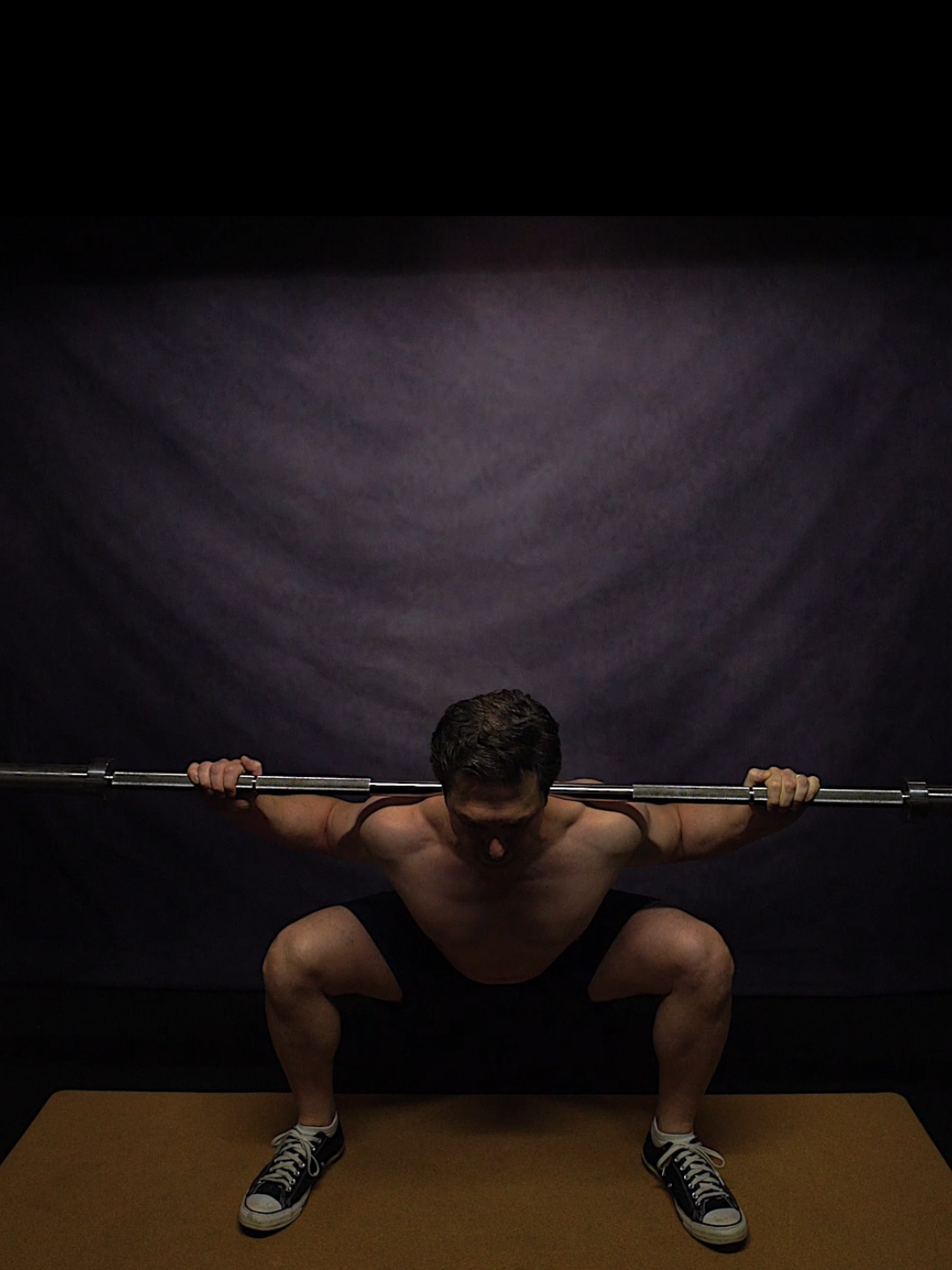
The Low Bar Squat is a popular variation on the Back Squat you will see in powerlifting and strength training circles. The bar is placed lower down across the shoulders than the traditional back squat
Low Bar Squat
Muscle Groups Involved
- Quads - Primary
- Glutes - Primary
- Hamstrings - Primary
- Erectors - Primary
Category
Barbell
Highlights
- The bar should be across your shoulder blades, not on top of them.
- Take a wider stance.
- Lean forward more if necessary.
- Rip the carpet apart with your heels to activate glutes more.
Description
The Low Bar Squat is a popular variation on the Back Squat you will see in powerlifting and strength training circles. The bar is placed lower down across the shoulders than the traditional back squat as it allows for a more horizontal torso angle at the bottom of the squat. This places more emphasis on the musculature of the hips, glutes, and low back. To perform the Low Bar Back Squat start in a standing position in front of a loaded bar. Brace your abdominals into a neutral spine position. Take a deep breath and redouble your brace as you step under the bar. Shrug your shoulders back and down a little to create a shelf of muscle for the bar to rest on comfortably. The bar should not be contacting your spine or the bones of your shoulder blade. Place your hands on the bar, wider than you would for a standard back squat to take pressure off of your shoulders. Take two steps back into the squat position. Sit back into the squat as you lower yourself towards the floor. Allow your torso to face the floor as you lower yourself. Brace hard at the bottom of the squat and press back up in a straight line to the starting position. Be sure to lock out your knees and hips at the same time.
Common Mistakes
Trying to keep your chest up can strain your back and neck. Instead, allow
Sign in to see all the informationTrying to keep your chest up can strain your back and neck. Instead, allow your torso to be more horizontal than in a traditional back squat to place more emphasis on the musculature of your hips and low back.
Pro Tips
Think about pressing the triangle of the top of your back into the bar inst
Sign in to see all the informationThink about pressing the triangle of the top of your back into the bar instead of keeping your chest or head up. It will improve your muscle activation and reduce the risk of cheating or hyperextending your back.
Purpose
This exercise is fantastic for building well developed hips. For men it can
Sign in to see all the informationThis exercise is fantastic for building well developed hips. For men it can create a more solid foundation and thicken up skinnier looking legs. For women it can create more full hips and give an hourglass shape to their physique.
Form
The bar should be resting on your shoulder blades and across your back but
Sign in to see all the informationThe bar should be resting on your shoulder blades and across your back but NOT resting on the spine. Be sure to shrug back to protect your spine. Your knees should track over your feet or outside of your feet. Sit back into the squat and do not round or arch your back.
Additional Names
Powerlifting Squat