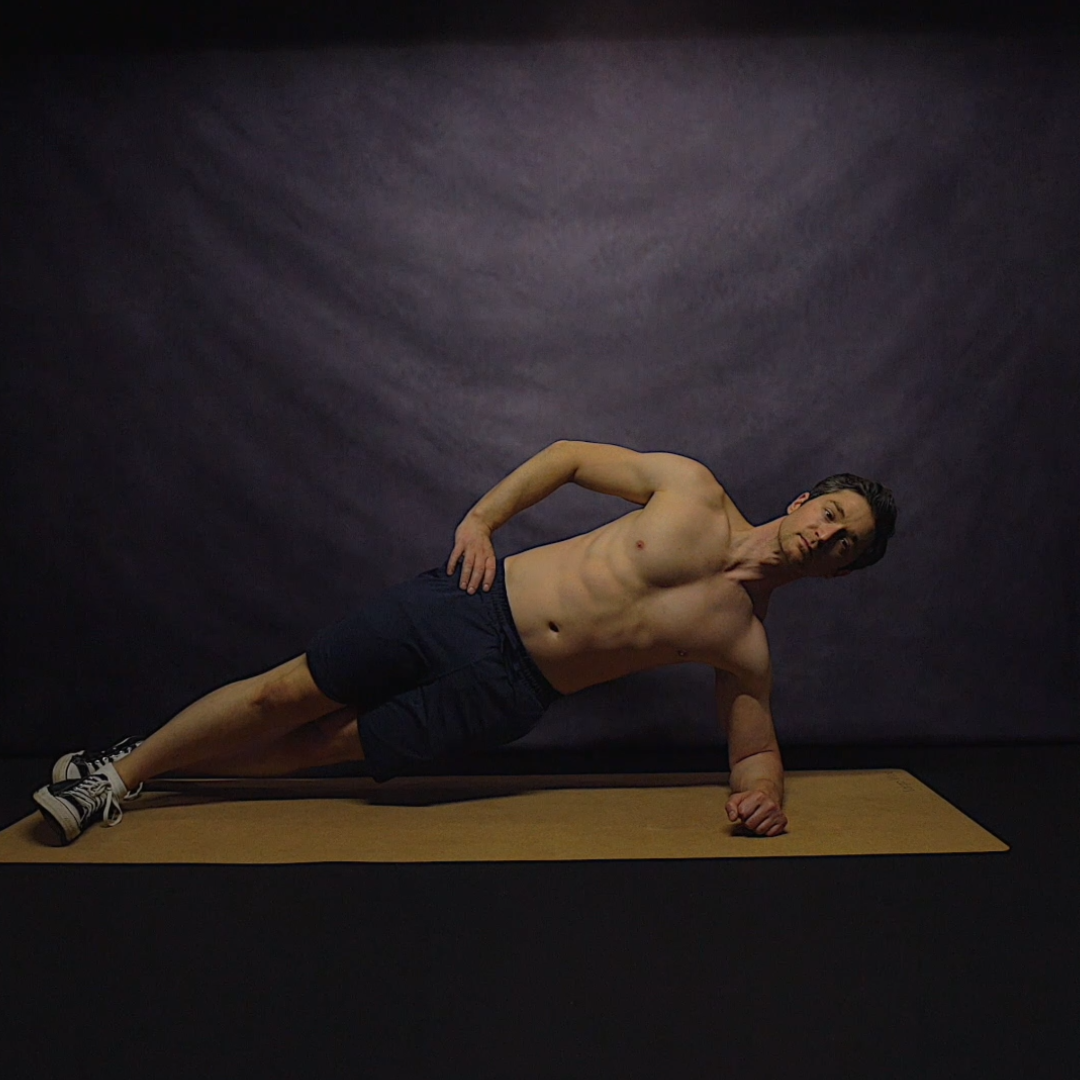
The Side Plank is a popular core strengthening exercise that is commonly used to treat low back pain and increase athletic ability. It works the oblique muscles as well as the muscles in your shoulder
Side Plank
Muscle Groups Involved
- There were no muscle groups associated with this exercise.
Category
Bodyweight
Highlights
Description
The Side Plank is a popular core strengthening exercise that is commonly used to treat low back pain and increase athletic ability. It works the oblique muscles as well as the muscles in your shoulders to stabilize your upper body. To perform a side plank, start by lying on your side, propped up on your elbow, packing your shoulder down and back for stability. Your top foot should be placed in front of or on top of your bottom foot. Raise your hips off the floor by contracting your core. Be sure to squeeze your abdominals, glutes, and quadriceps all at the same time for the best results.
Common Mistakes
Do not twist your body towards the floor or the ceiling. Brace your glutes,
Sign in to see all the informationDo not twist your body towards the floor or the ceiling. Brace your glutes, quads and core to keep your body in a straight line. Do not bend or flex at the hips. Do not hang on your shoulder. Instead, actively use your shoulder muscles to support your upper body.
Pro Tips
Think about “bringing your hips through” to keep your pelvis in a strai
Sign in to see all the informationThink about “bringing your hips through” to keep your pelvis in a straight line with your body. I also like placing my top hand on my hip for balance and to keep a neutral spine.
Purpose
The Side Plank is great for lateral stability, core strength, and preventin
Sign in to see all the informationThe Side Plank is great for lateral stability, core strength, and preventing back pain.
Form
Your ankles, knees, hips, shoulders, and ears should all be in a straight l
Sign in to see all the informationYour ankles, knees, hips, shoulders, and ears should all be in a straight line. You can place your top foot in front of your bottom foot or directly on top of your bottom foot.
Additional Names