The Straight Leg Deadlift or stiff legged deadlift is a popular variation of the deadlift exercise that places more emphasis on your hamstrings and lower back. It is often confused with the Romanian d
Straight Leg Deadlift
Muscle Groups Involved
- Hamstrings - Primary
- Erectors - Primary
- Glutes - Primary
Category
Barbell
Highlights
- Brace your core
- Push your hips back as you lower the weight. Bend at the hips, not the waist
- Keep a small bend in your knees
- Follow through with your glutes and lock out your hips at the top of the repetition
- Do not bounce the weight off the floor
- Do not round your back
Description
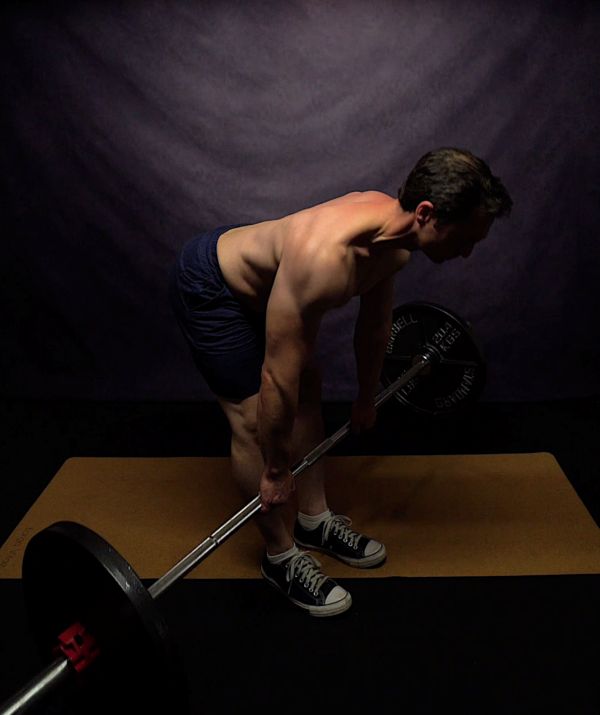
The Straight Leg Deadlift or stiff legged deadlift is a popular variation of the deadlift exercise that places more emphasis on your hamstrings and lower back. It is often confused with the Romanian deadlift. The commonly accepted difference is that the Straight Leg Deadlift is performed by placing the bar on the ground in between repetitions, often with a slightly more straight knee angle. To perform the Straight Leg Deadlift start in a standing position with the bar approximately 1-2 inches away from your shins. Brace your abdominals and glutes. Take a deep breath and redouble your brace. Sit back as you flex your hips as you bend down to grab the bar to place tension on your hamstrings and glutes. Take a double overhand, palms down, grip on the bar. Take all of the tension out of the bar before lifting it from the floor. Push your hips through as you lift the bar, locking out with braced glutes at the top. Pause briefly while maintaining tension throughout your body before lowering the bar under control to the starting position.
Common Mistakes
Use less weight for these than Romanian Deadlifts as these are more challen
Sign in to see all the informationUse less weight for these than Romanian Deadlifts as these are more challenging. Do not flex your knee which changes this into a Romanian or standard Deadlift. Do not bounce the weights off the floor.
Pro Tips
Push your armpits towards your hips to activate your lats and get better co
Sign in to see all the informationPush your armpits towards your hips to activate your lats and get better control over the bar while protecting your back from unnecessary strain. Elevating your toes on a plate can also increase the amount of stretch felt in the calves and hamstrings improving flexibility.
Purpose
A well developed posterior chain is important for maintaining posture as we
Sign in to see all the informationA well developed posterior chain is important for maintaining posture as well as developing the musculature of the lower body in conjunction with the upper body creating a more harmonious picture. By using exercises that develop the upper and lower body at the same time you can maintain balanced proportions while bringing up any weak points.
Form
Your standing leg should have a slightly bent knee. Let the weight guide yo
Sign in to see all the informationYour standing leg should have a slightly bent knee. Let the weight guide your arm position as you move backwards and forwards. Your back leg that gets lifted shoulder always stay in line with your torso as much as possible.
Additional Names
Stiff Leg Deadlift