
The traditional Calf Raise performed with or without weights is a foundational exercise for strengthening the lower legs, preventing ankle injuries, and improving athleticism. To perform a Calf Ra
Standing Calf Raise
Muscle Groups Involved
- Calves - Primary
Category
Highlights
- Lock your knees (straight)
- Fully lockout at the top
- Do not relax at the bottom
Description
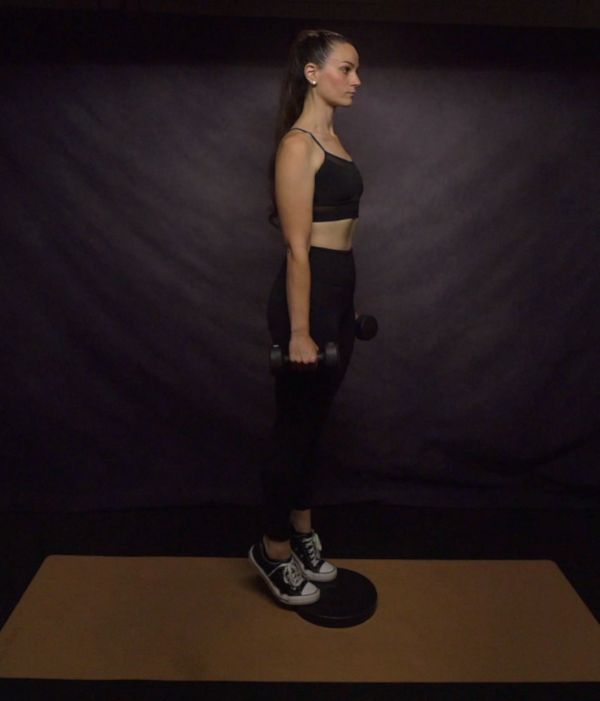
The traditional Calf Raise performed with or without weights is a foundational exercise for strengthening the lower legs, preventing ankle injuries, and improving athleticism. To perform a Calf Raise, start with both feet planted firmly on the floor. You can also opt to elevate your feet to increase the stretch felt by standing on a plate or other stable surface to allow your heels to go lower than your toes. You can use your hand to balance if needed. Initiate the movement by pressing the balls of your feet firmly downward which will elevate your heels. Continue to drive through the floor until you can’t go any higher while maintaining a locked knee position. Pause briefly at the top and squeeze. Lower yourself under control to the starting position without going slack at the bottom. Repeat for the desired number of reps. This exercise can be performed holding dumbbells or with a barbell placed on your shoulders for increase resistance.
Common Mistakes
Do not bounce at the bottom or spring yourself up into position. Slow contr
Sign in to see all the informationDo not bounce at the bottom or spring yourself up into position. Slow controlled movements work best. Avoid being too relaxed at the bottom of the movement to make the exercise more safe for your ankles.
Pro Tips
Use weights that are challenging and slow methodical repetitions to overcom
Sign in to see all the informationUse weights that are challenging and slow methodical repetitions to overcome the inherent springiness of these muscles. Stored energy in the Achilles tendon can make working the calf muscles tricky for some which is why higher repetitions are usually favored for this muscle group. Slowing down the movement and using heavy enough weights will maximize activation.
Purpose
Turning your toes in will bias the outer and least well developed head of y
Sign in to see all the informationTurning your toes in will bias the outer and least well developed head of your calf muscles. Turning your toes out will bias the inner, more visible head of the calf. By using both methods you can create the classic Diamond Calf that is prized in bodybuilding.
Form
Sign in to see all the information
Additional Names