
The Lateral Step Down is a functional exercise that builds lower body strength and supports and stabilizes the knee, ankle and hip. To perform the Lateral Step Down start in a standing position on
Lateral Step Down (Elevated)
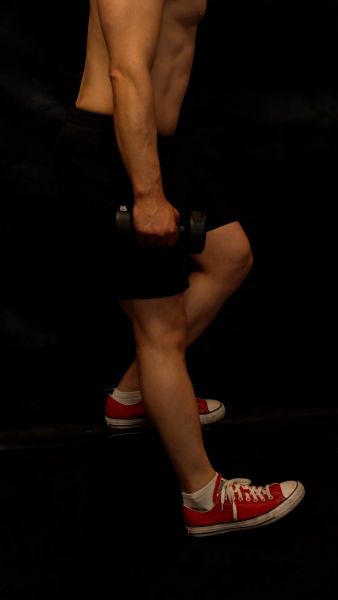
Muscle Groups Involved
- Glutes - Primary
- Quads - Primary
- Calves - Primary
Category
BodyweightDumbbell
Highlights
- Brace your core before moving.
- Do not let your knee cave in.
- Do not push off the floor.
Description
The Lateral Step Down is a functional exercise that builds lower body strength and supports and stabilizes the knee, ankle and hip. To perform the Lateral Step Down start in a standing position on an elevated stable surface. Position yourself so that your standing leg is on the edge of the surface and your non-working leg is hanging in the air. If you need additional resistance you can hold a dumbbell on the non-working side. Begin the movement by bracing your abs and bending your standing leg to lower your body. Squat down until your non-working foot is almost touching the floor or as low as you can go without pain. Pause briefly in the bottom position before driving through your standing leg heel back to the starting position.
Common Mistakes
Do not round your back to get lower. Do not let your knee collapse inwards.
Sign in to see all the informationDo not round your back to get lower. Do not let your knee collapse inwards. You can go onto the ball of your standing foot but try to keep the heel down. Do not push off the floor with your non-working leg.
Pro Tips
Drive through your heel to increase glute activation. Brace your abs hard t
Sign in to see all the informationDrive through your heel to increase glute activation. Brace your abs hard to improve stability and balance.
Purpose
The purpose of the Lateral Step Down is to improve hip and knee strength an
Sign in to see all the informationThe purpose of the Lateral Step Down is to improve hip and knee strength and stability. It can also be used to stretch and strengthen the Achilles tendon and calves.
Form
Your working leg should have the knee track over, past or outside of your t
Sign in to see all the informationYour working leg should have the knee track over, past or outside of your toes. It should not cave inwards. The non-working leg should be straight and not push off the floor.
Additional Names