
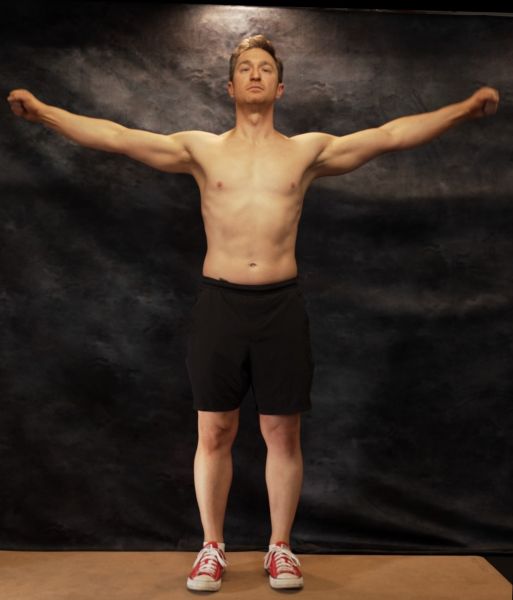
Arm Circles are a popular upper body warm up exercise that promotes joint health and circulation to the neck and shoulders. To perform Arm Circles start in a standing position with your arms raise
Arm Circles
Muscle Groups Involved
- Delts - Primary
- Chest/Pecs - Primary
- Lats - Primary
- Mid Back/Mid Traps - Primary
- Upper Traps - Primary
Category
Bodyweight
Highlights
- Start in a standing position, arms out to your sides at shoulder height.
- Start with 6 inch forward circles. Work up to big sweeping circles.
- Go in the opposite direction. Start with small circles and work your way up.
- Include shoulder blade circles as well to make the warm up more intense.
Description
Arm Circles are a popular upper body warm up exercise that promotes joint health and circulation to the neck and shoulders. To perform Arm Circles start in a standing position with your arms raised out to your sides to shoulder height. Start the movement by making small forwards circles with your arms - about 6 inch circles with your hands. After a few repetitions slowly increase the circumference of your circles until you are moving your arms in large, sweeping circles. Pause and repeat in the opposite direction, starting again with small circles and working towards larger ones.
Common Mistakes
Do not internally rotate (roll forwards) your shoulder joints. Do not hyper
Sign in to see all the informationDo not internally rotate (roll forwards) your shoulder joints. Do not hyperextend your back or hunch your back to increase your range of motion. Do not push through pain. Start with small circles and gradually increase your range of motion.
Pro Tips
Include shoulder shrugs and/or shoulder blade circles along with the Arm Ci
Sign in to see all the informationInclude shoulder shrugs and/or shoulder blade circles along with the Arm Circles to increase scapular (shoulder blade) mobility and make this a more dynamic upper body warm up that will also warm up your entire shoulder girdle and your neck.
Purpose
Arm Circles are a simple, accessible warm up for the shoulders and upper bo
Sign in to see all the informationArm Circles are a simple, accessible warm up for the shoulders and upper body before a work out. It can warm up the shoulder joints and the soft tissues and muscles surrounding the joints.
Form
Arms should start at shoulder level and create large sweeping circles in bo
Sign in to see all the informationArms should start at shoulder level and create large sweeping circles in both directions by the end of the exercise.
Additional Names