
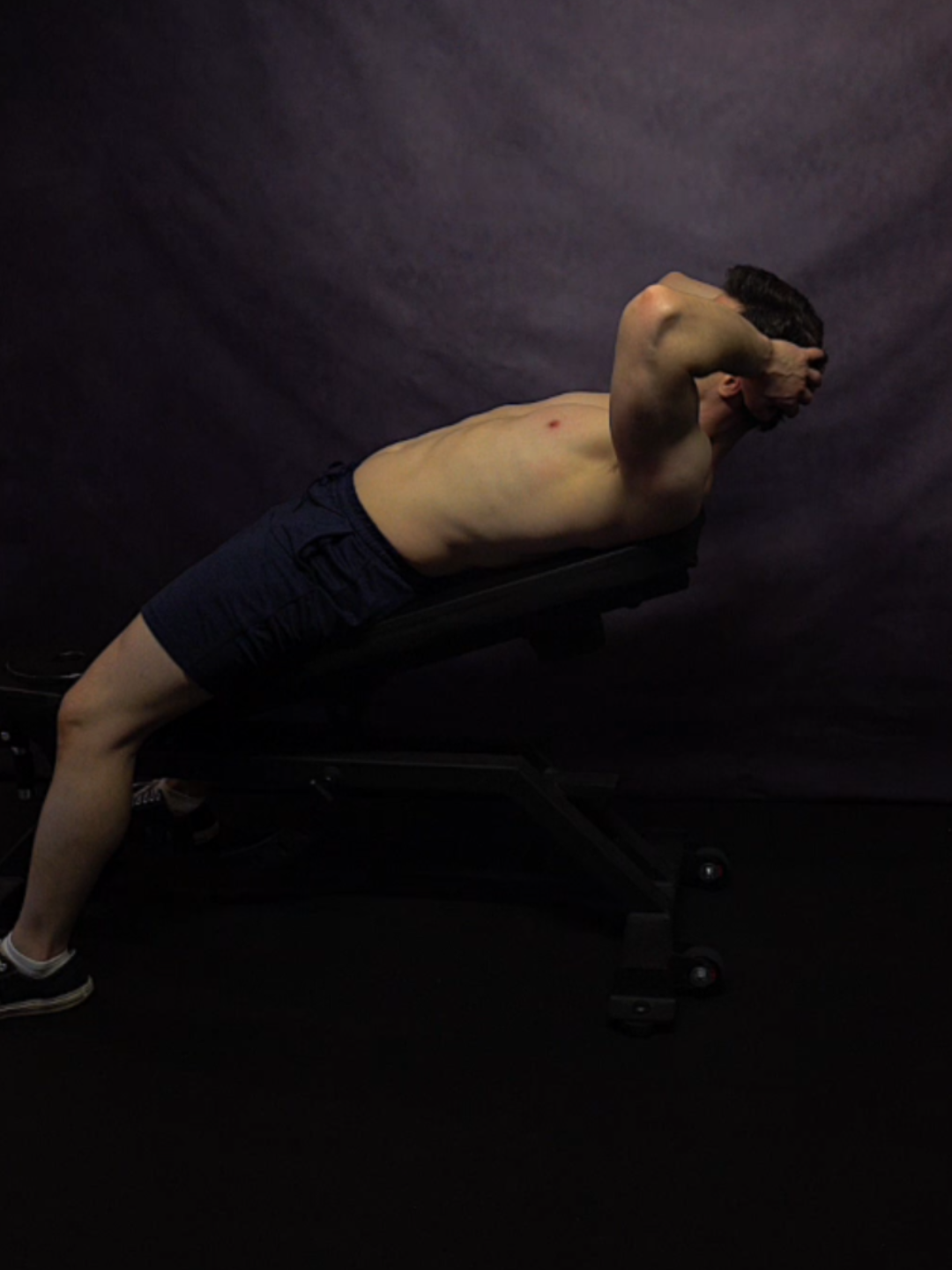
The Neck Flexion exercise is a scalable way to strengthen and stretch the front portion of your neck which is important for posture, neck health and stability and even preventing headaches. To per
Neck Flexion Assisted, Unassisted, Weighted
Muscle Groups Involved
- There were no muscle groups associated with this exercise.
Category
Bodyweight
Highlights
Description
The Neck Flexion exercise is a scalable way to strengthen and stretch the front portion of your neck which is important for posture, neck health and stability and even preventing headaches. To perform Neck Flexion Hand Assisted start in a lying position on your back on an incline bench set to approximately 30 degrees. Place your hands behind your head to support its weight. Start the movement by gently tucking your chin and flexing your head forward. Use your hands as much as you need to comfortably support the weight of your head. Once you can perform the desired number of repetitions you can increase the resistance by removing the support of your hands. Once you require more resistance you can use the weight of your own hands or use a weight plate placed on your forehead to increase the challenge.
Common Mistakes
Do not tuck your chin too hard. Do not let your neck flop backwards. Lower
Sign in to see all the informationDo not tuck your chin too hard. Do not let your neck flop backwards. Lower it and raise it with control. Do not push through pain. This exercise should be painless. Prioritize repetitions over weight. It is safer and more important to do more repetitions than more weight as weight placed on the cervical spine can increase your risk for injury if done improperly.
Pro Tips
Perform this exercise 2-3 times per week as your recovery allows. Do not pr
Sign in to see all the informationPerform this exercise 2-3 times per week as your recovery allows. Do not progress with resistance until you feel completely comfortable with the challenge and repetitions you are currently using.
Purpose
Neck Flexion when performed dynamically can improve the function of the cer
Sign in to see all the informationNeck Flexion when performed dynamically can improve the function of the cervical spine, increase range of motion and decrease pain.
Form
Use a training partner or film yourself to ensure good form throughout the
Sign in to see all the informationUse a training partner or film yourself to ensure good form throughout the entire exercise. Do not allow your neck to collapse backwards. There should always be a nice smooth, even curve to your cervical spine as you perform the exercise.
Additional Names