
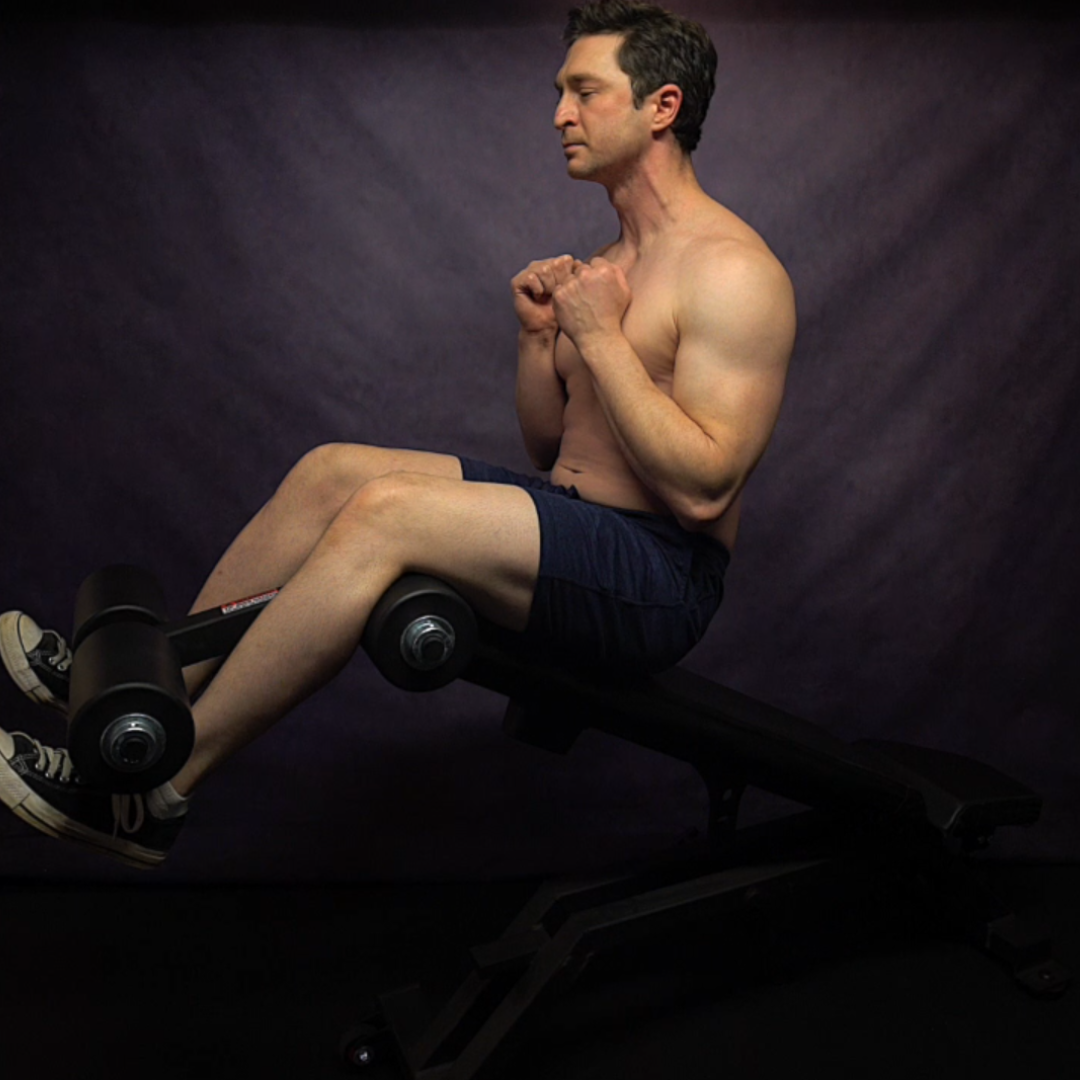
The Decline Sit Up is a more challenging variation on the iconic Sit Up that uses a decline bench to increase the difficulty of the exercise. This variation targets the abdominals as well at the hip f
Decline Sit Up
Muscle Groups Involved
- Abs/Core - Primary
- Hip Flexor - Primary
Category
Bodyweight
Highlights
- Keep your spine neutral during the whole movement.
- Keep your abs as flat as possible. Do not let them bulge or dome out.
- Use controlled movements and do not bounce or use inertia.
Description
The Decline Sit Up is a more challenging variation on the iconic Sit Up that uses a decline bench to increase the difficulty of the exercise. This variation targets the abdominals as well at the hip flexors. To perform the Decline Sit Up, begin by adjusting a decline bench to the desired angle. The steeper the angle, the more difficult the exercise. Start by sitting on the bench with your feet secured under the footpads. Brace your abdominals firmly before beginning to lower yourself towards the floor as you lie back. You can place your hands behind your head to support your neck or in front of or across your chest for stability. Keep your back and neck straight as you lower yourself towards the bench. Pause briefly at the bottom stopping short of the bench or lightly touching it with your back. Redouble your abdominal brace and bring your body back up to the starting position. Pause briefly at the top before repeating for the desired number of repetitions.
Common Mistakes
Do not round or arch your back. Maintain braced abdominals throughout the m
Sign in to see all the informationDo not round or arch your back. Maintain braced abdominals throughout the movement to protect your back. Do not throw yourself forward. Do not let yourself drop down to the bench. Do not push your head forwards which can strain your neck.
Pro Tips
Use weights once your bodyweight is no longer challenging. If you get a cli
Sign in to see all the informationUse weights once your bodyweight is no longer challenging. If you get a click in the front of your hip when performing the Decline Sit Up, stretch your hip flexors before continuing. If the click continues, this exercise probably isn’t right for you.
Purpose
The Decline Sit Up emphasizes abdominal and hip flexor strength in a large
Sign in to see all the informationThe Decline Sit Up emphasizes abdominal and hip flexor strength in a large range of motion which is especially important for athleticism and back health.
Form
Use a mirror or training partner to ensure that you are maintain a neutral
Sign in to see all the informationUse a mirror or training partner to ensure that you are maintain a neutral spine throughout the movement.
Additional Names