
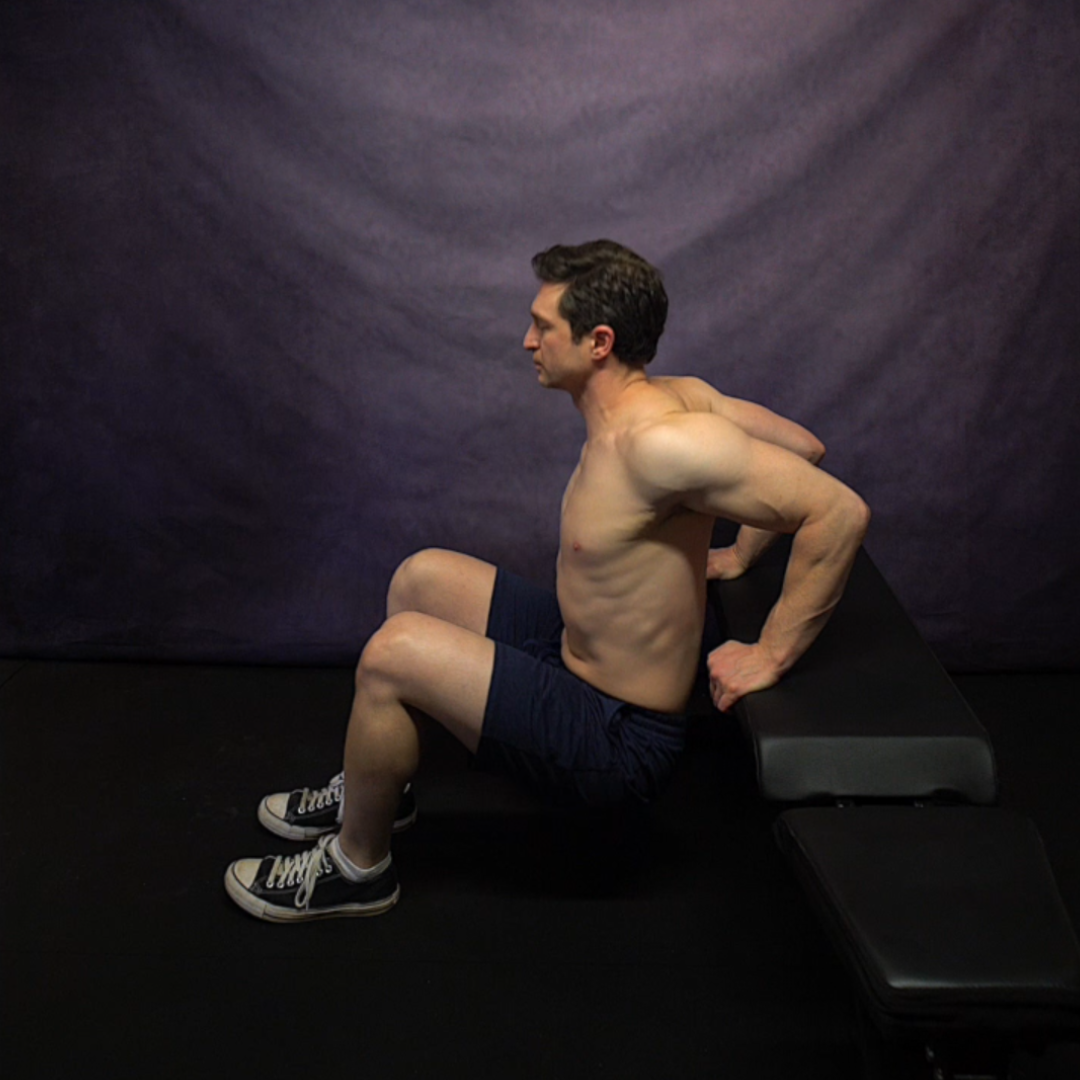
The bench dip is a bodyweight exercise that targets the muscles of the triceps, shoulders, and chest. It is fantastic for gaining and maintaining shoulder health if performed carefully, with a full ra
Bench Dip
Muscle Groups Involved
- Triceps - Primary
- Delts - Front - Primary
- Chest/Pecs - Outer/L - Primary
Category
Bodyweight
Highlights
- Lock shoulders down and back BEFORE putting them under load.
- Fingers face forward when you grip the bench.
- Keep your back as close to the bench as possible.
- Raise your feet off the floor to increase resistance.
- Add weight to your lap with weight plates if you need more resistance.
Description
The bench dip is a bodyweight exercise that targets the muscles of the triceps, shoulders, and chest. It is fantastic for gaining and maintaining shoulder health if performed carefully, with a full range of motion. To perform the Bench Dip, start by sitting on the edge of a sturdy bench or chair with your hands gripping the front edge beside your hips, and your legs extended in front of you. You can place your feet flat on the ground to make the exercise easier. Slowly lower your body by bending your elbows until you can go no further. Your goal is to go as low as you can without causing any pain. Pause briefly in the stretched position, then push through your palms, fully extending your arms until you return to the starting position. Focus on maintaining control and stability throughout the movement, and avoid letting your shoulders hunch up towards your ears.
Common Mistakes
Do not let your shoulders roll forward as you lower yourself. Do not look u
Sign in to see all the informationDo not let your shoulders roll forward as you lower yourself. Do not look up or down during the movement. Maintain a neutral spine the whole time. Do not bounce at the bottom.
Pro Tips
Weight can be added to your lap by placing weighted plates on your thighs t
Sign in to see all the informationWeight can be added to your lap by placing weighted plates on your thighs to add more resistance to the movement. You can also elevate your heels on another bench in front of you to increase the difficulty and place more emphasis on your triceps.
Purpose
This exercise is fantastic for building up the triceps and stretching and d
Sign in to see all the informationThis exercise is fantastic for building up the triceps and stretching and developing the outer pectorals. It can improve posture by stretching the muscles in your upper body that often become tight from prolonged sitting.
Form
Use a mirror or a friend to ensure that your shoulders remain back and do n
Sign in to see all the informationUse a mirror or a friend to ensure that your shoulders remain back and do not roll forwards during the movement which can cause shoulder pain and place excessive strain on the shoulders.
Additional Names
Reverse Dip