
The hyperextension exercise, also known as the back extension, is a classic movement aimed at strengthening the lower back, glutes, and hamstrings. Historically, it has been a staple in strength train
Hyperextension
Muscle Groups Involved
- Erectors - Primary
- Hamstrings - Primary
- Glutes - Primary
Category
BodyweightDumbbell
Highlights
- Brace your abs the entire time.
- Go high enough on the pad that your back does not round at all.
- Think about pushing your hips into the pad to raise yourself up.
- Use added resistance if the exercise becomes too easy.
Description
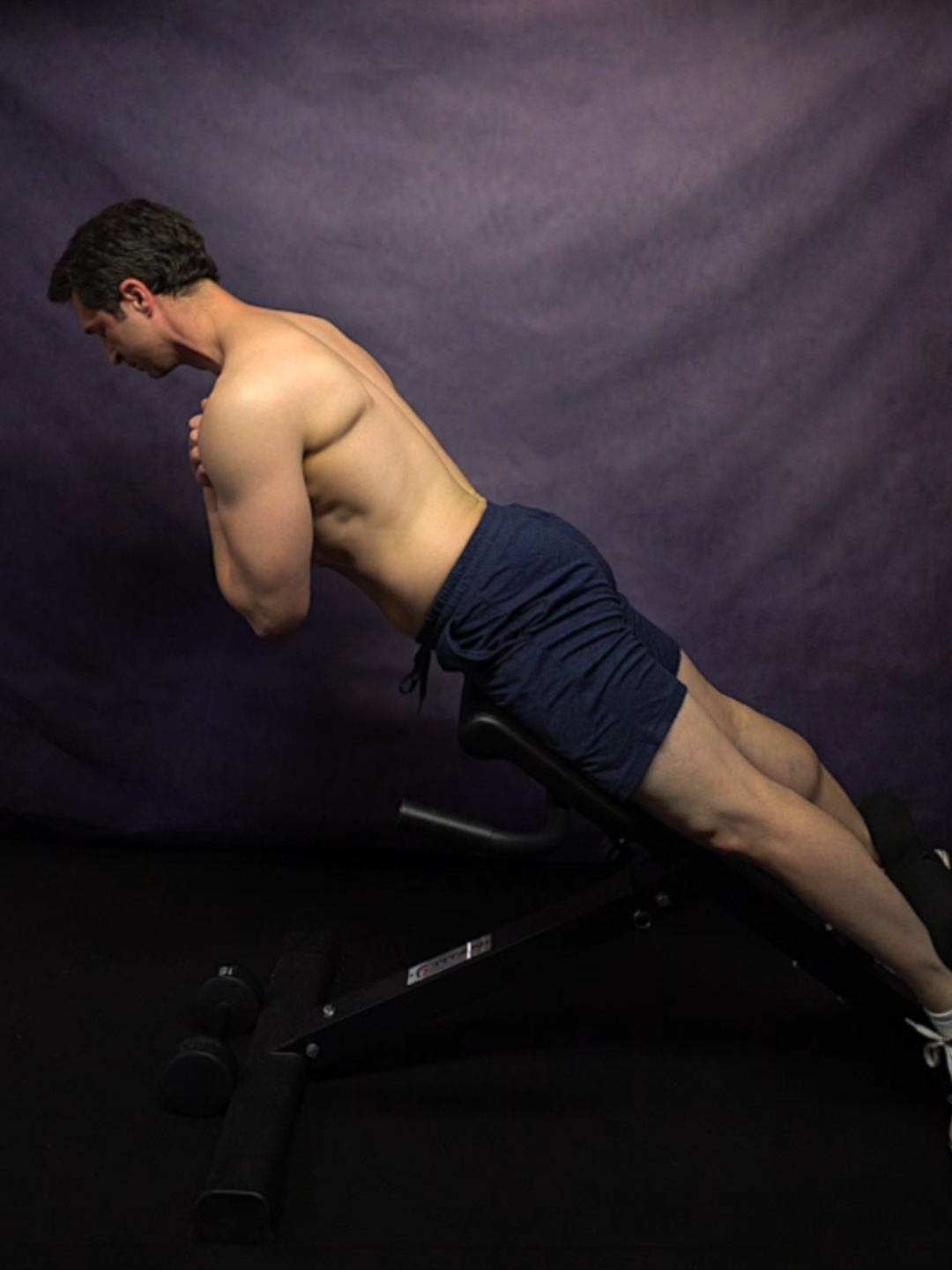
The hyperextension exercise, also known as the back extension, is a classic movement aimed at strengthening the lower back, glutes, and hamstrings. Historically, it has been a staple in strength training and rehabilitation programs to enhance posterior chain strength and spinal stability. To perform the Hyperextension start by positioning yourself face down on a hyperextension bench or Roman chair with your hips supported and your feet secured. This exercise can be scaled to your abilities by using support, progressing to your own bodyweight and eventually adding extra resistance by holding a dumbbell or weight plate. The main form of the exercise is similar regardless of the level you perform. Start the movement by bracing your abdominals, glutes, and quadriceps. Begin to lower yourself under control until your hips are fully flexed but your back is not rounding. Redouble your abdominal bracing and lift yourself back up to the starting position. If you are using supports, press your hands down to lift your body back up to the starting position while simultaneously using your back, glutes, and core muscles.
Common Mistakes
Do not go so low that your back rounds. Do not arch your back excessively a
Sign in to see all the informationDo not go so low that your back rounds. Do not arch your back excessively at the top of the movement. Do not let go of your abdominal bracing at any time during the movement. “Stay tight” throughout the whole exercise. Do not swing or bounce at the bottom of the range of motion.
Pro Tips
Holding a dumbbell at your throat increases the challenge to your upper bac
Sign in to see all the informationHolding a dumbbell at your throat increases the challenge to your upper back spinal erectors which are often difficult to target. Picture that you are pushing your hips into the pad in front of you instead of imagining that you are pulling yourself up. It will help keep your core tight and improve activation of your glutes.
Purpose
The Hyperextension exercise is one of the most popular lower back strengthe
Sign in to see all the informationThe Hyperextension exercise is one of the most popular lower back strengthening and rehabilitation movements. It is fantastic for improving muscular endurance and strength while increasing your functional range of motion.
Form
Your spine should remain neutral throughout the entire movement. At the top
Sign in to see all the informationYour spine should remain neutral throughout the entire movement. At the top of the movement your body should be in one straight line.
Additional Names
Back Extension